Centuries-old artisanal traditions rarely intersect with top-tier machine learning research, but that frontier is precisely where TeaAI operates. Our Chief Technology Officer, Dr. Tharindu Kaluarachchi, delivered a keynote speech at the prestigious International Conference on Machine Learning (ICML) within the Global South ML track.
Titled “The Super Trader Paradigm: How TeaAI is Augmenting Centuries of Tea Tradition in Developing Economies with Human-Centered and Domain-Specific Machine Learning,” the keynote shed light on how modern machine learning and industrial automation can transform one of the world's oldest and most labor-intensive value chains.
What is ICML and Why Does It Matter?
The International Conference on Machine Learning (ICML) is universally recognized as one of the “Big Three” premier academic conferences in artificial intelligence and machine learning (alongside NeurIPS and ICLR). Organized by the International Machine Learning Society (IMLS), it is the global stage where foundational breakthroughs in deep learning, reinforcement learning, optimization, and computer vision are unveiled.
Presenting at ICML, especially through forums highlighting real-world, high-impact applications, is a testament to world-class technical rigor. It emphasizes that applied ML research isn't just about training bigger generic foundation models in Silicon Valley; it is equally about tackling highly specialized, data-scarce, and high-impact industrial problems where general-purpose AI falls short.
Meet the Speaker: Dr. Tharindu Kaluarachchi
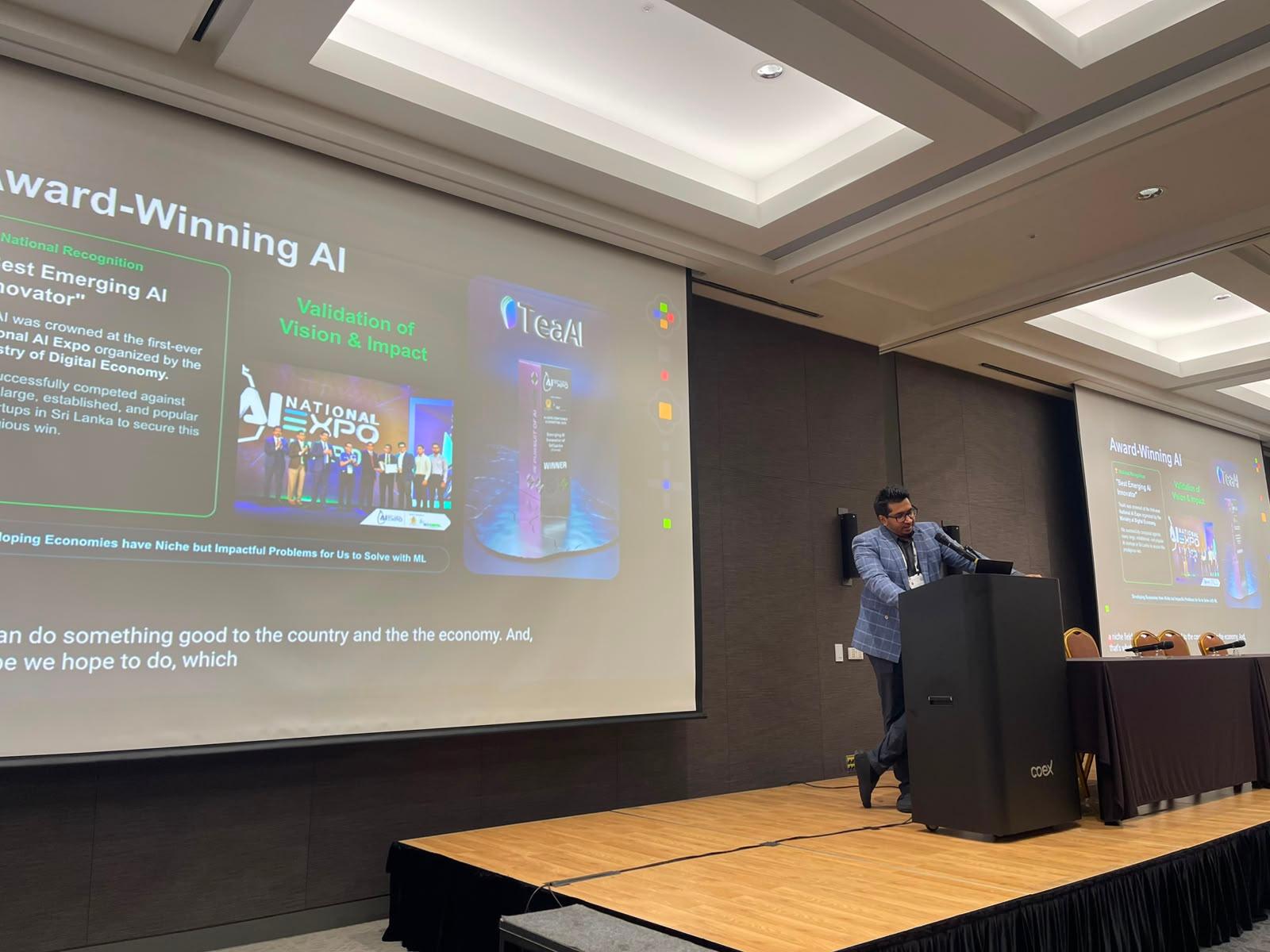
Dr. Tharindu Kaluarachchi serves as the CTO of TeaAI. Tharindu has dedicated his research career to Human-Centered Machine Learning. In line with that, TeaAI's vision stems from the philosophy that artificial intelligence should not seek to replace human intuition, but rather augment human capability. By fusing domain-specific machine learning with real-world hardware automation, team TeaAI have achieved breakthroughs and earned TeaAI the title of “Emerging AI Innovator” at Sri Lanka's inaugural National AI Expo.
Key Takeaways from the Keynote: Inside TeaAI
Tharindu took the ICML audience on a journey from Emperor Shen Nung's legendary discovery of tea in 2737 BC to today's massive $57 billion global market, where black tea accounts for 75% of worldwide consumption and forms an economic lifeline for developing nations like Kenya, Sri Lanka, and India.
1. The Challenge: A Massive, Subjective, and Data-Scarce Domain
Despite modern commerce, the B2B tea trade still relies heavily on manual human evaluation. A tea trader must evaluate and match over 12,000 samples every single week. Building machine learning models for this ecosystem faces steep technical hurdles:
- No Existing Datasets: No public or private datasets existed for tea grading prior to TeaAI.
- Model Incompatibility: Standard off-the-shelf vision models fail because general datasets cannot capture the deep domain data.
- Extreme Label Subjectivity: Tea grading is inherently comparative and noisy. Tea masters hold hundreds of reference standards in memory, leading to variance across individuals and cataloging sessions.
2. Creating the “Super Trader”
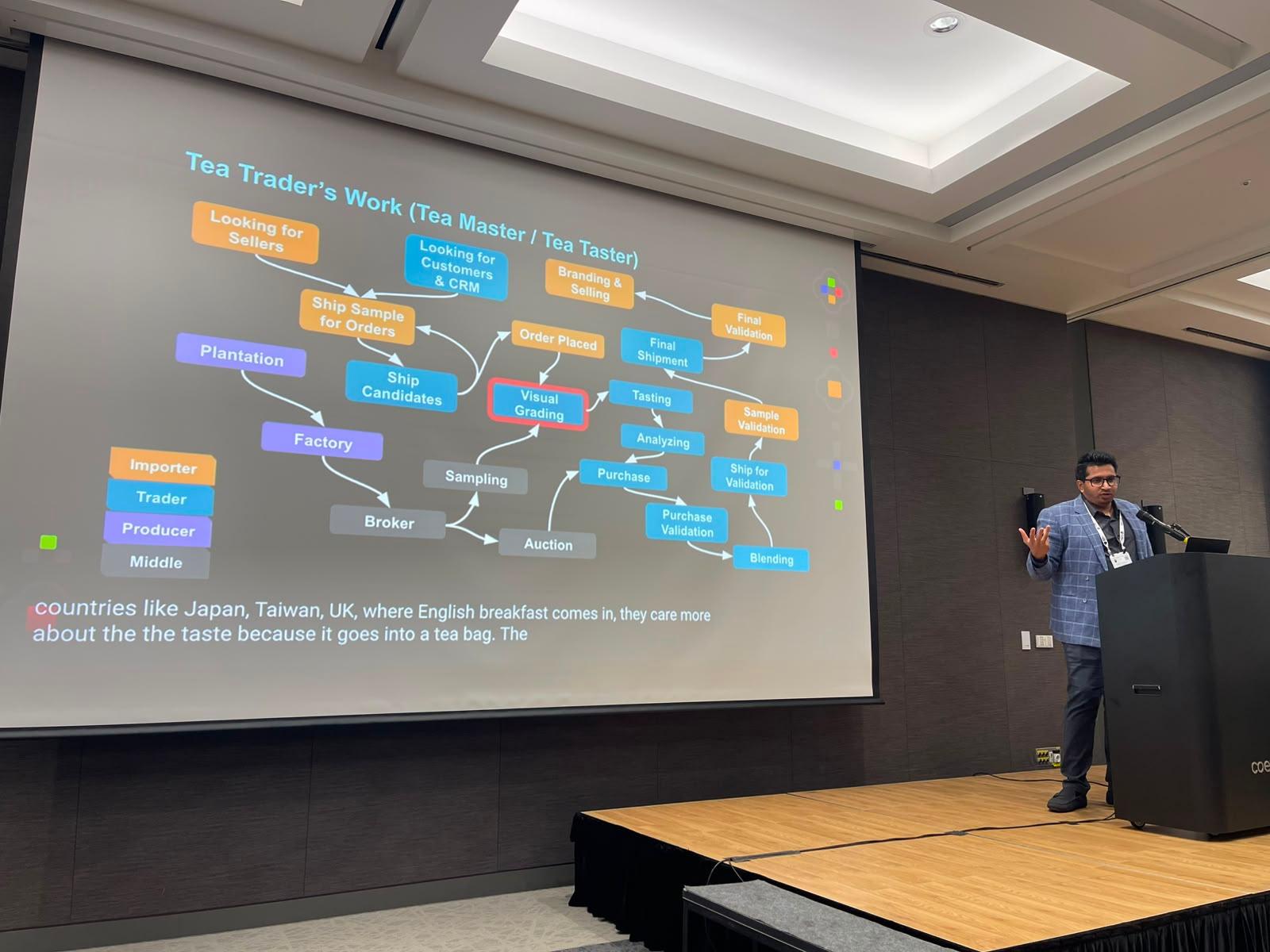
TeaAI's goal is not to remove the tea master, but to create a “Super Trader”. By scanning all ~12,000 weekly auction lots against buyer specifications automatically, the system filters the search space and surfaces hidden bargains—what Tharindu described as finding overlooked “gold coins”.
This frees masters and traders from repetitive grading, allowing them to focus on tasting, creative blending, and customer acquisition. Tharindu also briefly highlighted auxiliary AI models built on top of TeaRetina:
- Auction Price Forecasting: Predicting final auction clearing prices one week in advance with a 5% average MAPE (Mean Absolute Percentage Error).
- Broker Buyer Recommendations: Recommending top buyers.
- Automated Tea Grading Note Taking: Intelligently taking accurate grading notes at speed.
Beyond Code: Macroeconomic and Social Impact
The tea industry is an economic pillar of the Global South. Tea accounts for 12% of Sri Lanka's and 16% of Kenya's entire national export earnings. In these regions, millions of smallholders and pluckers depend on tea cultivation for their livelihoods.
By introducing consistency into grading, reducing subjectivity and inefficiencies, and elevating quality transparency, TeaAI creates direct economic uplift. TeaAI, through its advanced tech, aspires to improve the quality of life of everyone involved in the tea industry from the plucker to the consumer.